Show and Tell: The Managua Trees of Life and the Impending Death of the Ortega Regime
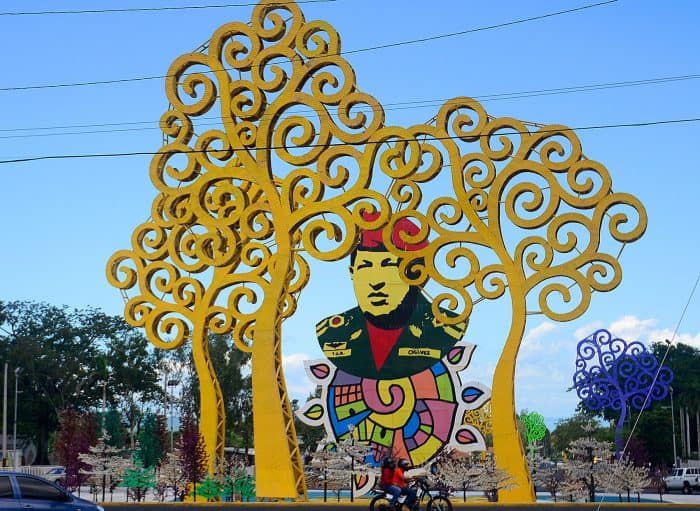
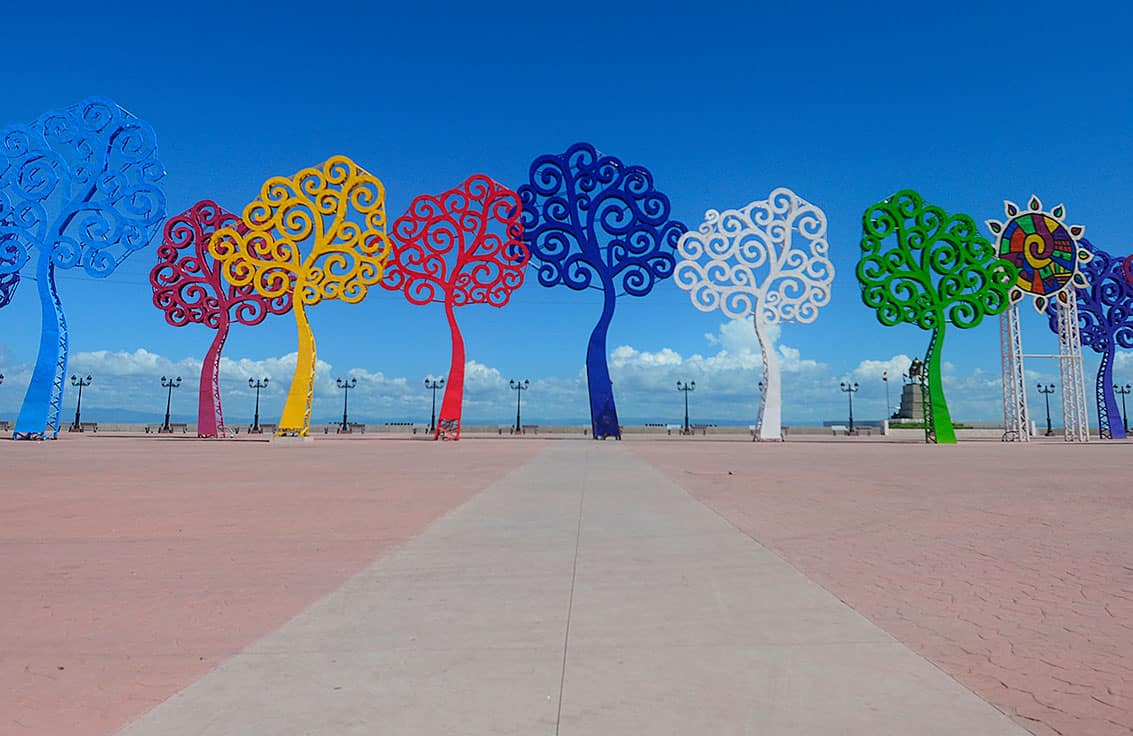
In 2016, I had the opportunity to travel to Managua on a trip with my church (it was kind of voluntourism, but kind of a missions trip) and the first day we saw the more scenic parts of the capital. On the way, we passed this: a crazy colorful and weird array of metal statutes with trees and a traffic circle featuring none other than Hugo Chavez. At the time, I didn't who Hugo Chavez was aside from the late-night ramblings of Sean Hannity in middle school through my door (thanks, dad.) I certainly had no idea what these statutes were for and how they were so interconnected to political alliances.
So, I wanted to investigate the past, present and future of these odd pieces of art: why they were created, what the public thinks about them and what (if any) plans the city or the country has for them in the future.
Here is a disjunct summary of everything I found. There was a blog that are clearly from a tourist recounting the "weirdest places to visit in Managua" and a couple passing references in this New Yorker article. The main news source however, was the Costa Rican source The Tico Times. This article says the Chavez statute was commissioned in memoriam of Chavez in 2013 at the behest of First Lady Rosario Murillo, who is a poet and the Vice President/spokeswoman for the Ortega regime. The Ortega regime developed ties with Chavez's Venezuela around 2008 when the stream of foreign aid from the US dried up with Nicaragua's political and civil institutions. The "trees" are largely seen as an extension of her influence over the state, leading the Tico Times to speculate that really "she is the one pulling the strings."
Meanwhile, according to the Economist, the common Nicaraguan expresses frustration with the nearly $425k spent to build the trees and the nearly $1 million spent to maintain them. That's an expensive art contract for the second poorest country in the Western Hemisphere. Naturally then, the first thing Nicaraguan protestors tore down in response to a pension hike that escalated into a massacre was the "trees." To the common people, it is a familiar trope, fighting a anti-democratic government living in opulence while they struggle in poverty. The "trees of life" to many commoners represented a robbery of life-giving, limited funds for a frivolous purpose: the worst kind of government consumption. If anything, the trees that are left standing are now poisoned with greed responsible for the blood of those that died fighting against yet another power-hungry revolutionary turned personalist dictator. Now, it is only a matter of time before the 72-year-old Ortega's regime shrivels like the diseased tree it has become.
Comments
Post a Comment